Friday, November 30, 2007

Crawlyflower tales

A few years ago, I found myself staring at luscious cauliflowers in the produce section with wonder and it was only then that I realized that I cooked only with frozen cauliflower. I vowed to change that immediately and placed a gorgeous cauliflower head in my cart. My heart sang all the way home because I knew I would be biting into the fresh taste of that crunchy crucifer that I had been missing all this time.
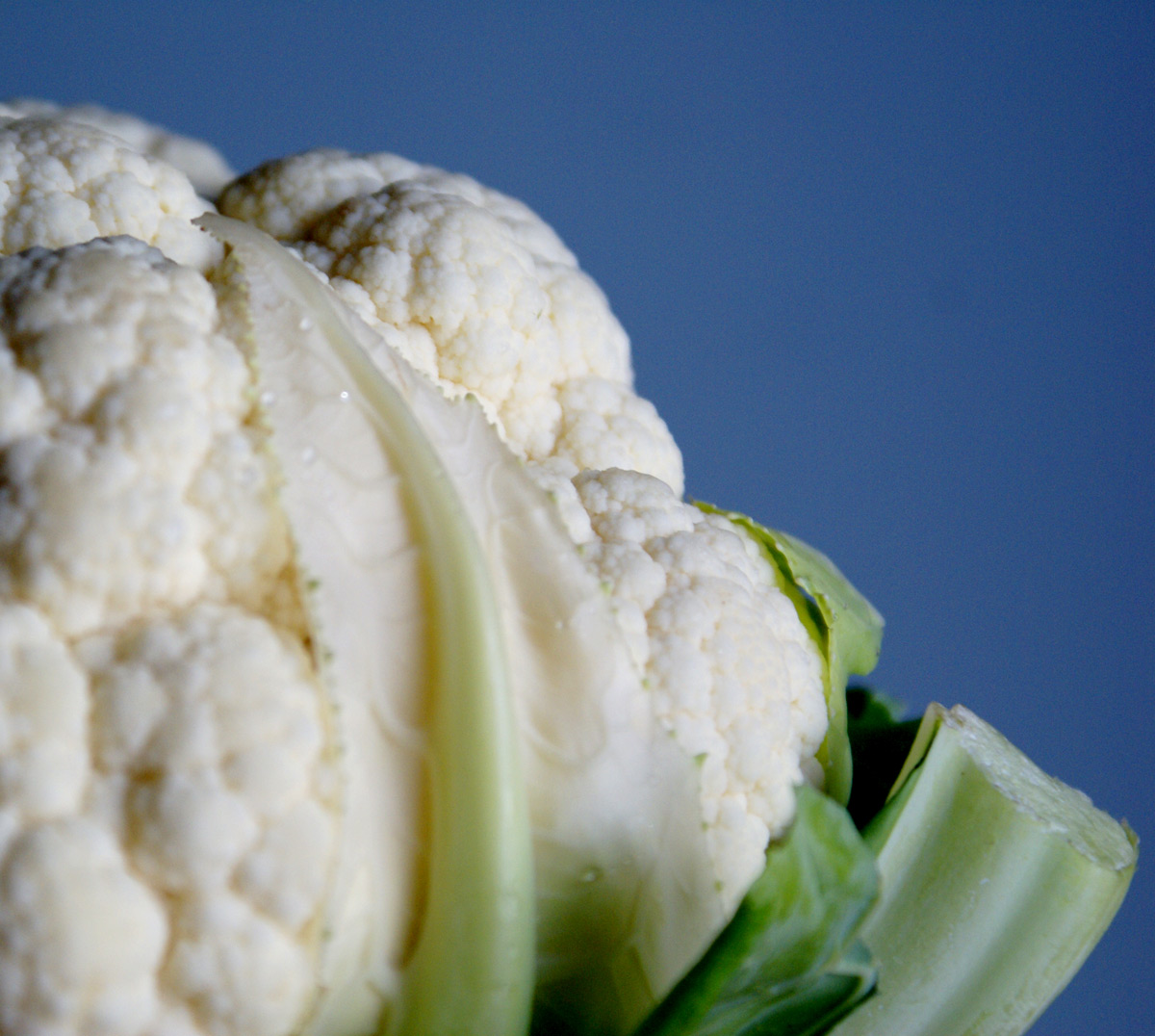
I set it up on my cutting board with great gusto and started removing all the outer leaves carefully. My father-in-law had told once me that those leaves were edible and quite nutritious but right now I was more interested in the "white curd" of the head. From the corner of my eye, I saw a very plump and very green young leaf move slightly. I turned the cauliflower to address that leaf and the other leaves that were still attached to the head in that area. I cut through the leaf only to see it start to ooze and wiggle like it was possessed.

That green leaf was a humongous green worm, fattened by all the minerals in the vegetable. My husband says I screamed the house down. I don't remember. I just remember curling up on the floor and wishing that the cauliflower and its resident would just disappear.

Needless to say, I had forgotten why I bought only frozen cauliflower. You see if there are a hundred cauliflowers in the produce bin, I pick the only one with worms in it. Such is my luck.

I went back to buying frozen cauliflower until very recently. I still don't care for worms in my produce but I have become more used to different types of worms after attempting to make a vegetable patch in my backyard this past summer. Medha is a fan of worms; she indulges in baby talk with earthworms that she holds her in her palm. She has dangled them in front of my face several times to see if my reaction changes over time; a scientific experiment, she says, to see if the data will change over a period of time. My screams are no longer as shrill as they used to be but my threats have become worse. And How to Eat Fried Worms also helped quite a bit. I sat through it without throwing up.

Cauliflower still remains one of our favorite vegetables and I am glad it does. If properly washed and cleansed of all trails that worms might have left behind, I love to eat it raw. I don't like it cooked or boiled into a soggy mess but I do love it when it's cooked well. Anita calls it al dente; I call it just right or tender but crisp.

There are so many ways in which to cook cauliflower that when my sister wouldn't stop raving about her friend Sushma's mouth-watering recipe, I just rolled my eyes. But she's not one to give up and made it for me when she visited. And I was hooked. It didn't have ginger like most aloo gobi ki subzis do, it had crushed garlic!

Cauliflower Subzi

Sushma's Aloo Gobi


  • 1 medium head cauliflower
  • 3-4 medium red potatoes
  • 2 tbsp oil
  • 2 medium cloves garlic, crushed
  • 1/2 tsp cumin seeds (optional)
  • 1 tsp cumin powder
  • 1 and 1/2 tsp coriander powder
  • 1/2 tsp red chilli powder, adjust to taste
  • 1/4 tsp turmeric powder
  • 2 tbsp tomato paste
  • 1/4 cup water
  • 1/2 tsp garam masala
  • salt to taste
  1. Cut the cauliflower into large florets, about 2 inches in size.
  2. Peel and dice the potatoes into slim chunks, about 1/4 inch by 1 inch. We will be adding the potatoes along with the cauliflower and we want them to cook without having to overcook the cauliflower.
  3. Heat oil in a large saucepan.
  4. Add crushed garlic. Before it browns, add cumin seeds, red chilli powder and turmeric powder.
  5. Take the saucepan off the stove and add cumin powder and coriander powder.
  6. Add cauliflower florets, potatoes and salt. Toss or stir well.
  7. Cover, return to stove and cook on a high flame until the cauliflower starts browning and the potatoes are cooked. Sprinkle with a little water to help the potatoes if they are taking too long to cook.
  8. Also dilute the tomato paste in 1/4 cup water, mixing it well into a thick paste.
  9. When the cauliflower is tender yet crisp and the potatoes have cooked, add the thick tomato paste and sprinkle the garam masala.
  10. Mix well in an almost folding-like action, briskly moving the cauliflower and potatoes from the bottom up.
  11. Cook for another 5 minutes, uncovered.
  12. Garnish with cilantro and serve hot with parothas or rotis and yogurt.


Notes:
  • I like to add some chopped green chillies towards the end for an added kick.
  • Any fragrant garam masala will do. If you would like to make your own, try this garam masala. Or you could use a store-bought garam masala. It's always better to make your own because you are sure you are using the choicest ingredients but not everyone has the time or the energy, in which case I think it's perfectly alright to use store-bought garam masala.


It look like it's raining cauliflower on the food blogs and that, too, without an event! I think it may have to do with it being a winter vegetable, with the growing season ending towards the end of October and even end of November in some places. Here are some of the mouth-watering recipes posted in the last couple of weeks:
Anita's Sookhi Aloo Gobhi
Ashwini's Gobi ka Kheema
Indira's Aloo Gobi with Kasuri Methi
Nupur's Spicy Cauliflower Soup


And now it's time to whoop a bit, do some virtual cartwheels and while I am at it, I might as well fly down a ski slope, too! I'm celebrating 30 consecutive days of posting, as part of NaBloPoMo. It was a lot of work and challenging at times but I did it! I did it!

I found some great local blogs, made some wonderful new friends and connected with several other bloggers. I hope to have a list of these blogs up soon!

Yay me!! And yay to all my NaBloPoMo friends and writers who wrote every day through the month of November! And yay to those to who joined in late and wrote with as much fervor!

For those of you, like Sandeepa, who want "nice" stuff to read everyday, I have some bad news. My blog will be going silent for at least a week while I try and rest those tired fingers, get some much needed sleep and catch up on my life! And you may not place bets on how long it will last! At least a week. Well, maybe a week. Or...

Thursday, November 29, 2007

Four Mile Historic Park

Earlier this year, I was a chaperone for Medha's class on a field trip to the Four Mile Historic Park in Denver. It is named thus because it is four miles from downtown Denver.


Built in 1859, Four Mile House once served as a stage stop, wayside inn, and tavern for travelers on the Cherokee Trail on their way to Denver City.


We chose the pioneer sampler with the following activities: butter making, farm chores, pioneer games, prairie school and gold panning. Chaperones were assigned to each of the stations that had been set up all over the 12 acre park and my station, as you know, was the outdoor kitchen where we made sweet cream butter.

Most of the older homes had fully-equipped outdoor kitchens as the stoves were usually wood-burning stoves, making it unbearable to cook indoors in the summer heat. Quite frankly, even the outdoor kitchen was unbearable. We were there at the end of April with temperatures in the low 80s, without the stove on, and we couldn't wait to get into the shade!


There were a lot of cast-iron kitchen tools displayed in the outdoor kitchen that were probably forged on the farm itself. Like these tongs...

and this ladle...

and this gong! The kids had a great time 'calling everyone for dinner!'


This is an original butter churner that was used in those days to make butter. We were so busy in the outdoor kitchen that I did not get a chance to take a picture of the inside of the butter churner. The wooden shaft had an X-shaped stomper at the end that agitated the cream when it was moved up and down. We did not use this antique butter churner and instead made sweet cream butter in a jar.

It was a day of immense learning for all of us. Me, most of all, because I also learned that the homes that have sunk into the ground leaving only the roof are built like that by design. They aren't homes! They are root cellars!

I have vowed to go back to the Four Mile Historic Park again because I missed out on the other activities. Before leaving though, I took one last picture of an old wagon, a replica of the wagons used by the pioneers as they burnt the trail on their search for gold and riches.


Life on a farm in the early 1900s was very hard! We came away very grateful for all the amenities we have in our homes today, especially running water, electricity and heating. If you have an old working farm in your area, keep it in mind for a day trip as it is an eye-opener, both for kids as well as adults.

Other old-fashioned working farms we have visited in the past year are:
Walker Ranch, Boulder, Colorado
Ardenwood Historic Farm, Fremont, California

Have you been to a historic farm and learned something new? Do consider sharing your experience with the rest of us!

Wednesday, November 28, 2007

Yearning for Homemade Butter

Homemade butter was what I grew up with. My mother would skim the cream off the milk on a daily basis and collect it in a pot that contained yogurt culture. Once every 10 days or so, she would pull it out of the refrigerator and leave it out for a few hours, add some ice cold water and churn it manually with a wooden ravi or a wooden version of this. The butter soon separated and floated to the top. The rest of it was slightly tart buttermilk or taak, a welcome cooler by itself or made into mattha on hot summer days.

A hot boiled egg mashed with freshly made homemade butter and some salt was my nirvana. That was also the only way I would eat egg yolk. I called this safed loni as opposed to regular store bought butter, which was always yellow in color.

Ever wondered why store bought butter, usually made from cow's milk, is yellow? Depending on the cows' diet, the natural color of butter can range from a creamy white to a golden yellow. In order to maintain year round consistency in the final product, manufacturers add annatto which is a food coloring agent.

Homemade butter goes rancid quickly, even when refrigerated, and must be used up or cooked further to make ghee. This was the part I didn't much care for and begged my mother to do it on the day when I had to attend lectures all day and all evening.

There are days when I yearn for homemade butter. I was therefore thrilled to learn about making sweet cream butter when I accompanied Medha's class on a field trip to the Four Mile Historic Park in Denver, earlier this year. It's not quite safed loni but it's almost there.

Homemade Sweet Cream Butter

All you need is
  • Heavy Whipping Cream
  • A glass jar


  1. Pour about 1/3 cup of heavy whipping cream into the glass jar and close tightly
  2. Gather everyone in the family and take turns shaking the jar.
  3. Keep shaking it. After a few minutes of vigorous shaking, it will look like this:

    Don't be tempted, it's not done yet!
  4. It will thicken further but it's not done until you hear the buttermilk start sloshing in the jar and the whap-whap of the solid butter as it bounces off the sides. It should look like this:

    We did this in a couple of minutes in summer. In winter, it takes longer, which is why you want to take turns!
  5. Carefully drain out the buttermilk and save it to knead dough or add to curries, if you wish. If you are like us and can't wait, then go ahead and spread the fresh butter on crackers...


This is also a fun activity to do with children. They make the butter and then enjoy it right away. If you plan to bake with this butter, remember that it has more water content than store bought butter and make changes accordingly. I hope to have pictures from our field trip in my next post. Until then, check out these resources:
The History of Butter
Mattha from Cuisine Cuisine
Indira's Glorious Golden Ghee - a tutorial
Saliu's Andhra Spiced Buttermilk

Tuesday, November 27, 2007

Papeta par Ida

There are days that seem to never end. Today was one of those days. It become excruciatingly so when I realized that I had put it off too long and I really did need to buy Medha some new pants. She's been going around looking like a tangewali. When used to describe someone who has nothing to do with a horse, it means that their trousers or pants are too short. At least, that's how it's used in my family! While we waited for her Science Project pictures to be printed out, we went to the Kohl's next door to remedy this terrible oversight on my part. In less than a half hour, armed with several fleece pants that she needed and matching jackets that she didn't need, we joined the line at the cashier. One woman was being served, next in line was a woman and her daughter and then us. 10 minutes and our status hadn't changed. It was the same story in the other lines else I would have jockeyed to another cashier. Another 10 minutes and Medha couldn't bear it anymore.

Let's go, Mumma! I don't care if my pants are short! I have enough for this week. Maybe we can do this another time.

Ah! I have raised her well! I threw the clothes down and walked out of there, hand in hand with my daughter. Both of us feeling immensely relieved! How do they do it?! I mean on a weekday, a schoolnight? How do they shop for teeny tiny stuff that no-one needs? Stuff that will be put away in a drawer or returned? Just because it's on sale?!

We were so hungry that we stopped to eat some overly processed but delicious and juicy kosher hot dogs at Sam's, picked up our photographs and came home! What I really wanted to eat was papeta par ida - eggs over potatoes - but there was none leftover from the batch I had made on Sunday.

Papeta par ida, also pateta par ida, is a Parsi dish that is quite like a fritata - spicy potatoes that have been doused with well-beaten eggs. I've had this for breakfast, brunch and lunch at a Parsi friend's home so I am not entirely sure when this is served. We usually make a brunch out of it as it is very filling and rather satisfying! A Parsi friend of mine had once told me that my papeta par ida was as good as her mother's!

Papeta par ida

Eggs over spicy potatoes


  • 4-5 medium red potatoes, diced into 1 inch pieces
  • 2-3 tbsp oil
  • 1/2 tsp mustard seeds
  • pinch asafetida
  • 2 small Thai chillies, chopped into two pieces each OR 3-4 long finger hot chillies, chopped into 1 inch long pieces
  • 6-7 kadipatta leaves
  • 1/4 tsp turmeric powder
  • 1 tbsp grated ginger (optional)
  • salt to taste
  • 1/4 cup finely chopped cilantro
  • 3 whole eggs and 3 additional egg whites

  1. Heat the oil in a saucepan.
  2. Add mustard seeds and when they pop add asafetida, followed by the chillies, kadipatta, turmeric powder.
  3. Then add the diced potatoes and some water, if you decide to use less oil.
  4. If you are using ginger, add that too. Followed by salt.
  5. Cover and cook on a medium flame until the potatoes are done.
  6. Sprinkle the chopped cilantro all over the potatoes. Mix it in if you wish. I like to leave it on top.
  7. Add salt to the eggs and beat till they are nice and fluffy and pour into the saucepan.
  8. Cover for a few minutes to allow the top layer to cook.
  9. When the eggs have set, your papeta par ida is ready to be served!
  10. Serve with toast, plain parothas or naan.

Notes:
  • Take as many potatoes as you will need to make a nice layer of potatoes in your pan. I usually take one extra potato cos I lose about as much while they are cooking. Like so:
  • If you would rather use 6 whole eggs that really is up to you. I usually take one whole egg and one egg white per person - yes, Anita, that extra yolk goes down the drain.
  • The other famous version of this Parsi dish is bhida par ida or bhida par idu. Eggs over spicy okra which is also very addictive.


We usually cut this up into quarters, with one quarter reserved for the hungry little girl as a quick healthy after-school snack.

Monday, November 26, 2007

Squeeze an Egg

Have you squeezed an egg lately? No?! You just don't love your eggs enough, I say!

naked egg
Like your chicken? Then go ahead and bend its bones!

bendy bone
Science Fair this week.

Sunday, November 25, 2007

Outdoor Winter Skating

The Steinbaugh Pavilion in downtown Louisville that rocked with music in summer during the Street Faire is now converted to an old-fashioned outdoor skating rink. Called WinterSkate, it's organized by Boulder Creek Events and this is its fourth year in downtown Louisville. There is Holiday music, of course, and free horse-drawn carriage rides in the evenings.

We went this afternoon but the real magic is in the evenings when it is all lit up.


Oops! There were falls galore! Lots of giggling and laughing!


followed by some bonding...


There was a very talented young girl on the rink and she stunned us with some really graceful moves.
WinterSkate is open seven days a week and it is open till midnight on New Year's Eve. Medha 's already making plans for her New Year's Eve. Dream on, I say!

On our way home, we stopped at Harper Lake to watch the sun set. The house below is on the short trail leading to the lake. How lucky are the people that live there!

The colors were muted compared to the shows the skies have been putting up for us lately. But it was beautiful, nevertheless.


It really has been a wonderful holiday week, topped off by a spectacular Sunday.

How was your Sunday?

Saturday, November 24, 2007

Sambar with my eyes closed

Mumma, will you please write down this recipe? So that when you're dead, I will still know how to make this?

A compliment, I think!

Perhaps it comes from all that talk about my Mom's nankatai, not knowing which recipe was the one she used and how the only way to figure it out was to try both and hope that one of them was it. Either that or it's the prolonged morbidity that has prevailed in our conversations lately!

So many bloggers start their blogs as a legacy of recipes and memories for their children. Others because they hit a wall looking for accurate pictures and descriptions of ingredients and homemade Indian food. Many others use it as a tool to share memories with family and friends far away. Me? I wish I had something even remotely as endearing. But no, I just wanted to figure out how Blogger worked. This was back in March of 2003, and food & family was the easiest topic to blog on. It didn't matter whether anyone would ever read what I had to say, I just needed to figure out what the hype was all about.

I've never really conformed and our life path after marriage certainly hasn't either. However, once there was a child in the picture, a lot of things changed because we didn't want our child to bear the brunt of our lifestyle. But she remains different as do her thought processes, shaped as she is by our attitudes and outlook. Sometimes, a tad too mature for a 9 year old. Other times, too naïve.

So when she asked me to write down the recipe, I wondered whether that could be the new meaning of my blog. And my inner core shuddered. But, like I said, when there is a child or there are children, one's perspective changes. I don't know that my entire blog or all the recipes, anecdotes and thoughts are for her - it's really for me and it's perfectly alright to be selfish on some fronts, I think - but this recipe is definitely for her. As is the backup of all my recipes. My blog, though, remains mine and a release for me and me alone.

One Pot Sambar

  • 2 tsp oil
  • 1/2 tsp mustard seeds
  • pinch asafoetida
  • 1/4 tsp fenugreek seeds
  • 1/4 tsp turmeric powder
  • 1 Thai green chilli or 2-3 finger hot pepper, sliced vertically into two
  • 2 sprigs of kadipatta
  • 1 red chilli, broken into 2 pieces (optional)
  • small ball of tamarind fruit pulp, about the size of a dollar coin
  • 1 can of Hunts organic diced tomatoes
  • 1 cup tur dal (split pigeon peas)
  • 3 cups water
  • 3 heaped tsp MTR Sambar Masala
  • salt to taste
  • cilantro for garnish, optional


  1. Heat oil in the pan of your pressure cooker
  2. Add mustard seeds and when they pop, add a pinch of asafetida, followed by fenugreek seeds.
  3. Add green chillies and kadipatta. Be ready with a splatter screen if these are wet or damp.
  4. Add the turmeric powder and the red chilli, followed by the diced tomatoes. Add about 1 can of water, too. This way the can gets rinsed out, too!
  5. Add about 1/4 up to 1/3 cup water to the tamarind fruit pulp and heat it in the microwave for about 10-15 seconds. Mash the tamarind pulp till you have a thickish paste. Discard any fibers or seeds. Add more water if needed.
  6. Wash the tur dal in a couple of changes of water and add it to the pressure cooker, followed by 3 cups of water, tamarind paste, MTR sambar powder and salt.
  7. Cook under pressure for at least 3 whistles. Sometimes I forget and let it go to 4 without any problems! Or cook for as long as it takes for tur dal to cook in your pressure cooker.
  8. Allow the pressure cooker to cool before you open it. Remember that it is still cooking in the built up pressure and you want to make the most of that. Plus it is wise to be safe.
  9. Stir well, adjust for salt and sambar powder, if required. If it is too thick for your liking, add more water and adjust the seasonings again.
  10. Garnish with cilantro and serve hot with rice or idlis or dosa.


We love this sambar so much that we can be found sipping on it, rather like soup. It's quite perfect for this cold weather!


Notes:
  • If you aren't sure if 3 tsp of MTR's Sambar powder is the right amount for you, start with 2 tsp and once you have opened the pressure cooker, do a taste test to see if you need more. I used only 2 teaspoons until recently as Medha could not handle the spice.
  • I have used a lot of sambar powders, and made my own, too. But for a quick sambar, I think MTR wins in taste and flavor. MTR spice mixes can be found in any Indian grocery store. Remember that you want the Sambar Powder and not the Instant Sambar Mix. Avoid the latter!


If you don't yet have a pressure cooker, I would exhort you to consider buying one as a Christmas gift for yourself. Think about it: it takes 20 minutes to cook something that would otherwise take at least an hour, if not more. It's taken me almost 2 hours to cook 2 cups of dal in a stockpot in Boulder, which is over a mile high in altitude. So much fuel and time wasted, not to mention the added frustration. You can cook directly in the pressure cooker or you can get inserts or containers that fit in the pressure to place different items. Target and Kohl's have pressure cookers in their cookware aisles or you could buy online from Amazon. I have only recently started cooking meat in the pressure cooker and it's so tender that I wonder what that mental block was all about! At least give it a thought!

Update: I am sending this to the lovely Linda, who is the host for JFI: Toor Dal.

Friday, November 23, 2007

Udon Noodles on my Mind

Is there anyone who hasn't thought of noodles this month? I know I have been rather obsessed.

My body went through contortions to capture images of noodles. I told myself that some of the positions were actually yoga. I was too lazy to set up my tripod and the light was failing fast so I set the exposure to 1/20s, put the camera on a 10 second timer, composed the shot and told those overstretched twisted muscles to be still, inhaled, pressed the shutter and held my breath, and slowly exhaled and relaxed but only after the camera had captured this...


and this...

Not bad for tripodless work, eh?! Of course, I used neither - actually there were hundreds I didn't use - as my entry for CLICK. Some of you might remember, of course, but for the benefit of those who don't, I sent this in.


I have had this packet of Udon noodles for quite a while now. I've been going back and forth on trying to figure out what to do with them. Do I try and deconstruct Siamese Plate's delicately spiced udon noodles in a white sauce? Or do I try Tao's udon noodles in ginger sauce? And then there was Nupur's udon noodle curry soup. And, Tea's Zaru Soba.

I decided not to think about it and as soon as I did that, I knew exactly what I wanted to make as the Friday night special chez Manisha. There was one catch though: I had to use what I had in the house since I have sworn to finish all the fresh produce in the house before I allow myself to go grocery shopping again.

Udon Noodle Curry

I used Nupur's recipe for reference and adapted it to the ingredients at hand.

  • Organic Udon noodles, 1 packet (3 x 3oz)
  • 1 tbsp oil
  • 2 cloves garlic, minced
  • 1 medium onion, diced
  • 1 and 1/2 tsp Thai green curry paste
  • 1 cup sugar snap peas, sliced at an angle
  • 1 red bell pepper, sliced
  • 1 orange bell pepper, sliced
  • 1 yellow bell pepper, sliced
  • 1 portabella mushroom cap, diced
  • 3/4 cup coconut milk
  • 4 cups water
  • 3 tbsp tamari sauce
  • 1 tbsp sugar
  • 1 tbsp lemon juice
  • 1/8 cup roasted peanuts, lightly crushed
  • cilantro for those who wanted it


  1. Cook the udon noodles according to the instructions on the package, but don't cook them completely as they will cook further when added to the soup. Drain and keep aside.
  2. Heat oil and sauté the onion and garlic until the onion starts turning brown.
  3. Add the green curry paste and fry for a few minutes until your kitchen smells like heaven.
  4. Add all the chopped veggies and stir fry for a few minutes on high heat.
  5. Add the coconut milk, water, tamari sauce and sugar and stir well. Add salt if desired and simmer for 10 minutes or so.
  6. Add udon noodles and cook until they are done.
  7. Turn off the stove, add lemon juice, garnish with peanuts and cilantro and serve immediately.
This was a complete meal by itself! We slurped on the soup and sucked in the noodles. These noodles have quickly taken the slot of my favorite noodles. They are smooth and firm and absorb the flavors of the sauce they are in.

This made enough for two meals for the three of us. And I am quite thrilled because I get to eat it again soon!

Notes:
  • I used what is labeled as tamari sauce - thanks Bee! - and was pleasantly surprised at how different the flavor is from regular soy sauce. But upon reading further, I think what I have is improperly labeled shoyu sauce as one of the ingredients is wheat. Tamari does not contain wheat. But it was not a problem as the flavor was mild and not in the least overpowering. Unlike soy sauce. Which is why I used 3 tablespoons of it! If you use soy sauce, use less of it than I did tamari sauce.
  • I used Thai Kitchen's Green Curry paste but only after sending my apologies to Pel. One of my conditions was to use whatever I had on hand! And I wanted to make this a vegan dish.
  • Medha is not yet a fan of Thai food. She danced all around the kitchen saying tikhat! tikhat! when I gave her some soup to taste. Once she had calmed down, she asked me if I had added the same stuff that is there in the Thai Green Curry her father and I love so much. I can't quite put my finger on it but I think she does not like the combined flavors of kaffir lime, galangal and lemon grass. She finds it too sharp. It's not the green chillies because she's been doing rather well with spicy Indian food. She drowned her noodles in Sweet and Sour sauce. Yes, that orange colored thing that no-one should keep in their homes.
  • To make this richer, one could add more coconut milk.
  • Most of the soupy part was absorbed by the noodles by the time we were done with dinner. So I might just add some more coconut milk and water and adjust the seasoning when I serve it again.
  • Plating food in an enticing way is not my forté. Nor do I have a variety of dishes and bowls to dress them up on. I guess what I am leading to is: please ignore the peanut skin that made its way to the bowl in the previous two pictures. It's not supposed to be there!


If you haven't yet voted for CLICK! Reader's Choice, please head on over and do so before voting closes on November 26, 2007. And don't forget to come back here and be nice to me, I'm a judge for the event!

Update: I am sending this to Suganya for her Vegan Venture event.

Thursday, November 22, 2007

Giving Thanks

After a sumptuous Thanksgiving meal that included a perfectly roasted turkey, stuffing, cranberry sauce, mashed potatoes and gravy, caramelized sweet potatoes, beans, homemade rolls dusted with sesame seeds, poppy seeds and caraway seeds, followed by pecan pie and ice cream, I am so stuffed that I cannot think! The wine flowed as we sat around the table and shared memories, music playing softly in the background. I think we are very lucky to have neighbors who are just like family!

I thought it would be very apt to use today's post to complete my series of Thank You posts that I like to do at least once a year. This list, as some of you may already know, is pulled directly from my logs and these are blogs that I am truly grateful to - for, without them, Indian Food Rocks would be yet another lonely, seldom-read blog. So I'd like to thank all the food blogs I have mentioned previously and also the 15 blogs that follow.

Malabar Spices, written by Mallugirl, rocked our world recently with her Express Cooking Event. Raid her blog for spicy recipes from India's Malabar coast. She has a droolworthy Nadan Kozhi Chicken Curry and I can't wait to try her Malabar Meen (fish) Biryani.

Masala Magic, written by Latha, may tell you to go watch Manjula on Youtube but I really think that you should go through her archives instead! Her red hot idli podi and easy rava dosa are amazing!

Musical's Kitchen, written by Musical of course, is a haven for vegetarians looking for that extra punch. She always has a surprising combination of fresh veggies and spices. Her palak kadhi is a regular feature at our home. Her Sweet potato stew (Thai style) looks too divine to pass up on!

One Hot Stove, written by Nupur, first regaled us from New York City and now she does the same from St. Louis, Missouri. Nupur is known for her fabulous writing as well as her A-Z series: A-Z of Marathi cooking as well as her A-Z of Indian Vegetables.

Padma's Kitchen, written by Padma, is an elegant blog with some of my favorites like akki roti, mamidikiya annam (mango rice) and Shahi Kofta curry.

Saffron Trail, written by Nandita, is the home of the Weekend Breakfast Blogging event. Nandita also has her own food video show on Nautanki TV. She focuses on healthy vegetarian recipes.

Samayal, written by Sudha, has a lovely recipe for Chicken Chettinad, a welcome variation for me. Her arachuvita sambar also sounds delicious!

Spicyana, written by Archana, is a feast for the eyes! She's the queen of baking, designing and decorating cakes. I was hooked right from the time she posted her first cake. Her creative talents extend to other things besides cakes, so if you haven't visited Archana's blog before, you need to stop what you are doing and do so now!

Stream of Consciousness, written by Shankari and sometimes by her husband Rajesh, is not just about food. You will find hair-raising pictures of Rajesh as he goes sky-diving, amazing pictures of the moon and spicy recipes. Shankari conducts cooking classes and has also appeared live on NBC's KCRA3. A huge round of applause for her, please!

Tastes like Home, written by Cynthia, comes to us from the Carribean. I love a gal who appreciates okra, my favorite veggie! Her pictures say it all. If you see something you like, you can always write to Cynthia to ask her for the recipe. She's really nice like that!

Tea and Cookies, written by Tea, is a blog that pays homage to fresh local produce with the most exquisite words ever. I have yet to come across a blog better written than Tea's. She has authentic Japanese recipes that she learned from her stay in Japan and I recently bookmarked her Zaru Soba recipe. The picture of soba noodles in that post could very well have been an entry for this month's CLICK!

Trial and Error, written by Nabeela, is one of my favorite blogs! I was first intrigued by her Marag, which I adapted to a slow cooker recipe. It's my comfort food now. I am still trying to figure out which of her mango sorbets I should try!

Vyanjanaa, written by g, is a chronicle of two kitchens separated by thousands of miles yet linked by a strong bond. Check out her Rajasthani papad ki subzi and her yummy garlic chutney.

What's For Lunch Honey?, written by Meeta, is a treat for the eyes and a feast for the soul. Don't believe me? Just head on over and check out her beautifully composed photographs, her tastefully created centerpieces, and of course her delicious recipes! She also hosts The Monthly Mingle with interesting themes each month.

When My Soup Came Alive, written by Sra, is a great blog to visit when you desperately need that chuckle! She launched her first event, Grindless Gravies recently, and already has a reputation for strictly enforcing the rules, which she changes every day. Or so I heard...

Thank you all very much!

Wednesday, November 21, 2007

Snow and Afghans

We woke up to between 3 and 4 inches of snow today.

We went from a warm and sunny Monday with a high of 77F to snow on the ground on Wednesday with a high of 30F. I don't think the kids care how cold it is though. Whoever is left in the 'hood is outdoors having snowball fights, while I hug my ginger tea and shiver indoors!

Thoughts of winter sent me scurrying to pull out my current 5 year project, a crocheted airy diamond afghan.

I started this on the California Zephyr in July last year so I am well over a year into it. About two-fifths of it is done. It takes me about an hour to do each row of 273 stitches. If I keep up this pace, it might be ready well before its time!

I am not cooking for Thanksgiving this year as we were invited to our neighbor's for the meal. I guess tandoori-style cornish hens will just have to wait a while.

I hope you all have a great Thanksgiving!

Tuesday, November 20, 2007

Parotha, The Making of

Batatyacha parotha, or aloo paratha, is one of our favorite parothas.

We're generally not very fussy about our meals. Breakfast served for dinner is just fine and leftovers from dinner for breakfast rock. So, batatyache parothe could very well be either breakfast or dinner. 1 cup of atta, 1 tsp of oil and a pinch of salt, kneaded into a medium-soft dough makes about 13-14 parothe. I knead the dough, cover it with a damp paper towel and let it rest while I get the stuffing ready. For the stuffing, I use about 5-6 medium boiled potatoes, mashed with a small clove of garlic, 1 tsp of red chilli powder, 1/8 tsp of turmeric powder and salt. I make this without garlic, too.

Start off with a small ball of dough. Your tava should be on the stove by now.

Roll it out some. I usually like to roll it out a little more than I need to.

Take a ball of the potato stuffing

And hide it in the dough, like so.

Press down on it gently to flatten it

Dust it with flour and turn it over so that the pleats are on the bottom.

Roll it out from the middle to the outside in a firm yet gentle motion. Do not flip it over.

Place it with the pleats facing up on the tava, to begin with, on a medium-high flame until it gets a few brown spots on the underside and starts puffing up a teeny bit. The latter depends entirely on how you roll it out so if it does not happen, don't fret.

Turn it over and cook the thicker side till it, too, has some brown spots. Take some ghee (5 drops or so) or melted butter and spread it quickly using a spoon on the parotha. Flip it over and do the same to the other side. Cook both sides for about a minute or so each...
...till you get this and serve immediately with chutney or pickle and raita.
This parotha is different from the aloo paratha found in Indian restaurants; it's rather delicate and much smaller in size.

Shivapriya has a fabulous tutorial on aloo parathas with much better pictures.
Luv2Cook has another version with tips on freezing parathas

Monday, November 19, 2007

Daddy, what if...

Daddy, what if your plane crashes and you die? she asked him just as he was leaving.

Traditionally, this is considered very ashubh. She would have been chastised and it would have been impressed upon her never to ask such questions again, her fears given no consideration.

These are real fears. Address them.

We did. She felt somewhat relieved. Her mood changed radically when she saw the light change outside. We grabbed our cameras and rushed to take pictures and watched the colorful display disappear in less than few minutes. We came back indoors marveling at the beauty of nature, all her fears forgotten.

A Colorado sunset, November 18, 2007

Just two places to set for dinner. We miss him but we know he'll be back soon.

Sunday, November 18, 2007

Ancient Cuisines: Pueblo Chicken

Long overdue. But perhaps just in time for Thanksgiving, if your family, like mine, does not care too much for roast turkey.

Pueblo Chicken

Based on a recipe from Spirit of the Harvest, North American Indian Cooking by Beverly Cox and Martin Jacobs

The original recipe uses rabbit, a major source of protein for Southwestern tribes. Rabbits were hunted by lighting fires around an area where they were abundant; the hunters then gradually moved in, trapping the animals from all sides. Rabbits were offered as ceremonial sacrifices and then eaten as part of ritual foods.

I haven't eaten rabbit but I am told it is like a leaner version of chicken, which is slowly fading in popularity at our dinner table but is still preferred to turkey.

  • 4 chicken breasts, boneless and skinless
  • 1 tbsp oil
  • 1 medium onion, chopped
  • 4 cups low sodium chicken broth
  • 1/3 cup red wine vinegar
  • 1 tsp red chilli powder
  • 1/4 cup yellow cornmeal
  • Salt to taste


  1. Dice chicken into bite size pieces
  2. Heat oil in a heavy stockpot and brown the chicken well.
  3. Add onion, chicken broth, water, red wine vinegar and red chilli powder.
  4. Simmer, partially covered for 45 minutes to an hour, or until the chicken is tender.
  5. Add salt and then slowly add the cornmeal, stirring as you pour. You do not want lumps.
  6. Simmer for another 10-15 minutes until the sauce is slightly thick.
  7. Serve with Ute tortillas


This is a great tasting thick stew. We imagined ourselves to be sitting by an open fire with the stew simmering over it. We ate with our hands, tearing pieces of the tortillas, to dip into the stew. We licked our fingers as the stew dribbled down them and decided to cook this stew the next time we went camping in the mountains. What a treat it will be to eat it out under the stars!

Saturday, November 17, 2007

Breaking Rules

bullseye

This is my entry for CLICK, a theme-based monthly food photography event. The current theme is noodles.

I am a judge for this round so my entry doesn't count.

The deadline is November 20, 2007 so if you haven't clicked yet, hurry up and send in your entry. The rules are here, and no, those are not the rules I broke!

Friday, November 16, 2007

Ugly is Delicious

What is there to lose, I thought?

Just a few more subscribers to my feeds (I'm sorry you don't enjoy my blog anymore! Maybe you'll change your mind and come back? Or maybe you just switched to another reader where you are not another statistic? I hope so!)

And traffic to this blog.

The former has been on a decline ever since I signed up for NaBloWriMo and then NaBloPoMo. The latter swings wildly based on the day of the week, although I think I have a fairly reasonable trend all mapped out. The name, Indian Food Rocks, could be considered a bit of a misnomer but if you go back enough into my archives - heck! just look at last month! - it's obvious that my blog isn't just about food. It's about life being spiced by food. So while food is one of the themes, it's also about family life, memories and vacations.

And, if Jai can bring out his pictures of food and pretend they are ugly, I can do better: bring out at least one genuinely atrocious picture. It's something I have been hiding for quite a while now, not knowing how it will affect further affect my dwindling readership - whether it will finally kill my blog? I've made this dish so many times that I could make it with my eyes closed; but for the life of me, I cannot seem to take a half decent picture of it! It looks like one of those generic dishes with a brown sauce, which all food stylists will tell you to avoid like the plague. Perhaps that holds me back. The last time I made it I decided to use less oil and make it healthier but instead, it looks like it is drowning in grease!

Chettinad Pepper Chicken

based on a recipe from Flavors of India by Madhur Jaffrey


  • 1-2 tbsp oil (and another 1-2 tsp oil for the last step)
  • 3 bay leaves
  • 3 whole cardamoms
  • 1 cinnamon stick, about 1 inch and broken
  • 1 tsp fennel seeds
  • 3 cloves
  • 2 tsp urad dal
  • 1/2 tsp turmeric powder
  • 2 medium onions, chopped fine
  • 2 tbsp Contadina tomato paste
  • 8 chicken breasts, boneless and skinless, diced into bite-size piece
  • 20 curry leaves
  • salt to taste
  • For the paste:
  • 1.5 tbsp cumin seeds
  • 5 dried red chillies
  • 3 tbsp coriander seeds
  • 1.5 tsp fennel seeds
  • 1.5 tsp black peppercorn
  • 1.5 tsp white poppy seeds (optional)
  • 3-4 medium cloves of garlic, chopped
  • 2 inch knob of ginger, chopped

  1. Heat 1-2 tbsp oil in the pan of your pressure cooker.
  2. Add bay leaves, cardamom, cinnamon, fennel seeds, cloves and urad dal. Stir and fry over medium heat until the urad dal turns a golden red.
  3. Add the finely chopped onions and sauté until they are soft and slightly golden.
  4. While the onions are cooking down, lightly roast cumin seeds, red chillies, coriander seeds, fennels seeds, black peppercorn, and the poppy seeds till they are fragrant.
  5. Allow them to cool slightly and blend into a paste with the chopped ginger and garlic.
  6. Add this paste to the onions with a few tsp of water to prevent scorching. Sauté for a few minutes.
  7. Add tomato paste and cook for a couple more minutes.
  8. Add chicken pieces, salt, 2-3 cups water and stir well.
  9. Cook under pressure for one whistle, then turn down the heat and cook for another 5-7 minutes.
  10. Allow the pressure cooker to cool and open it only when it is possible to do so safely. Do not rush this process as you want the chicken to be cooked completely. Stir well and transfer into a serving dish.
  11. Heat 1-2 tsp oil and add the curry leaves. Fry till the curry leaves are crisp. Pour over the chicken and serve with steaming hot white rice.

Notes:
  • The original recipe called for 5 tbsp oil. That can be brought down to under 2 tbsp. Even though it looks like the chicken is swimming in oil in the picture above.
  • Madhur Jaffrey asks for the whole spices to be roasted in oil and then ground to a paste in the coffee grinder. I prefer to dry roast my spices and I generally do not put wet ingredients like garlic and ginger into my coffee grinder. I use the blender and the resulting paste is therefore a little more coarse.
  • I have halved the number of red chillies and I skip the white poppy seeds cos that's one thing I forget to pick up from the Indian grocery store every time I go!
  • Chettinad Pepper Chicken is not cooked in a pressure cooker and has a thick sauce. Madhur Jaffrey recommends removing the chicken pieces from the pan and reducing the sauce till it is very thick. Once the sauce has thickened, the chicken should be returned to the pan, folding it in gently into the sauce and then cooking for another 5-6 minutes. We prefer to drown our rice in curry so I skip this step.
  • You could garnish this chicken with chopped cilantro.

It doesn't look very good but it is mind-blowingly delicious. Urad dal adds a great texture to the sauce and the fennels seeds are a treat to discover with every other bite.

Like Jai, I was planning to send this to Cathy for The Ugliest Gourmet event but my internal clock crapped out - the deadline was yesterday. I sent in my entry on Friday in any case but as I expected, it is not included. So take a look at the competition for Who is The Ugliest Gourmet and cast your vote. A comment I posted there earlier this afternoon does not show up so I am passing on the voting. Have fun!

This dish looks better when plated as it is offset by luscious long grains of basmati rice and some salad greens.

Apparently, there is someone called Bee who rants. Never heard of her.

Thursday, November 15, 2007

West Quoddy Head Lighthouse, Lubec

Lubec? Never heard of it, right? Well, it's time you do. It's the easternmost town in the continental United States and Eastport is the easternmost city. Both are in Maine.


The easternmost point in the United States is the West Quoddy Head Lighthouse, Lubec. They were celebrating the 200th anniversary of this historical lighthouse when we drove through Maine earlier this year, in July.


West Quoddy but easternmost? That's because the East Quoddy River is to the north in New Brunswick, Canada.

Isn't this a magnificent lighthouse?

Here's another picture from the front.


The United States Navy controls the lighthouse and we were the last but one family that was allowed into the lighthouse before they closed for the day. Here's Medha looking down and getting ready to take pictures. I felt sick looking at how close she was to the two horizontal railings and how far apart they were and how petite she was.

Sail Rock, just off West Quoddy Head, is the easternmost point in the USA. The mainland you see beyond that is Campobello Island, Canada.


We didn't have enough time to go puffin or whale watching. Maybe next time!

Wednesday, November 14, 2007

Just Four!

While I don't have issues with the word tag per se, I am particularly bad with memes. It's like going to the post office: something that has to be done for someone else. Once I am there, I am fine but getting there kills me.

However, a meme is great fodder for a NaBloPoMo post! Rachna tagged me for this meme of Fours. So here goes:


  • 4 Places I’ve lived:

    • Bombay, India, it's a love-hate relationship
    • Nairobi, Kenya, my Shangri La
    • Chestertown, New York, you can't get anymore in the boonies than this! There were less than 500 people there in winter.
    • New Lenox, Illinois, where a lot of my friends are


  • 4 Jobs I've had

    • Systems Analyst
    • Senior Consultant
    • Project Coordinator
    • Strategist

  • 4 Jobs I wish I had (not part of the meme but include it if it appeals to you):

    • Sleep bed tester
    • Foot massage quality control
    • Developer of games that stretch the mind for kids
    • Interior designer, with an emphasis on building homes for short people

  • 4 places I've holidayed:

    • Mombasa, Kenya, white sands and blue ocean
    • Goa, India, brown sand and lots of fish curry
    • Moab, Utah, I can't get enough
    • Nova Scotia/ Prince Edward Island, Canada, one of the most beautiful and scenic places I've been to

  • 4 Favorite foods:

  • 4 Places I'd rather be:

    • Right now? Most definitely in bed!
    • In the mountains
    • On vacation in the Badlands, Glacier National Park, Monument Valley
    • In bed! I know I already said that! But that's how badly I want to be there!

  • 4 bloggers I like to pass this meme onto
  • These three gals are fellow NaBloPoMo bloggers and could use this when the well starts to run dry.

And, don't forget to read Rachna's meme!

Tuesday, November 13, 2007

Curry that Pumpkin

We woke up to Jingle Bells on Saturday morning. It was bad enough that I was squashed between two people who I could not out-snore. Then to wake up to Christmas music, in the middle of Diwali, while it's still Fall, now that's outright blasphemy. Add to it the misery of not being able to find the remote to turn the darned thing off! And when I found it, it was yanked from my hands: Mumma! It's Christmas music! They're playing Christmas music! Jingle bells! Jingle Bells! Jingle all the way! She then proceeded to dance through the house, turning on every device that had a radio. I was not sure which was worse, the music or a chirpy person first thing in the morning.

It took me a while to get used to Christmas music the day after Thanksgiving. It may be hard to believe but I actually love Christmas music. Especially Christmas carols. But I get sick of it when that's the only thing playing on the radio. Now I have press all the buttons on my Bose and hope to set the alarm to another radio station. I sleep through the beep-beep-beep-beeeeeeep, all 90 seconds of it. I never hear it because it is predictable. Radio is different. It could be a song that brings back memories leading to a warm morning snuggle, it could be the talk-show host being her annoying self, it could be a bad commercial, it could be the weather or the news or traffic on I-25. It's never the same thing at that exact time every day.

But Jingle Bells before Thanksgiving? I mean come on! There are still so many leaves on the trees!
Dogwood tree, November 13, 2007

And, there are all those pumpkins to cook! Pumpkin becomes slightly sweetish when cooked and therefore complements spices very well. There is a lot that can be done with pumpkin apart from Pumpkin pie and pumpkin soup. Try making this pumpkin and potato curry. We love it!

Pumpkin and potato curry

Bengali Kumror Chakka

  • 1 small pie pumpkin, chopped into small cubes
  • 5-6 medium potatoes, cubed to same size as the pumpkin
  • 1-2 tbsp oil
  • 1 tsp panch phoran
  • a pinch of hing
  • 1 dried red chilli, broken into two pieces
  • 1 tejpatta
  • 2 inch knob of ginger
  • 2 medium size cloves of garlic
  • 2 green chillies, sliced vertically and seeds discarded
  • 1.5 tsp jeera powder
  • 1.5 tsp coriander powder
  • 1/2 tsp red chilli powder (optional)
  • 1/4 tsp turmeric powder
  • 1/2 tsp garam masala
  • 1 tsp amchur powder
  • salt to taste
  • some chopped cilantro, for garnish


  1. Pound the green chillies, ginger and garlic in a mortar and pestle into a corase mixture.
  2. Heat oil in the pan of your pressure cooker.
  3. Add the panch phoran and when it splutters, add hing, then red chilli pieces and then tejpatta.
  4. Then add the pounded mixture of green chillies, ginger and garlic.
  5. Add the potatoes and the pumpkin and stir.
  6. Mix all the dry spices except for the amchur powder with a few teaspoons of water to make a paste.
  7. Add this to the pan and stir well. Cook for a few minutes till you can smell the fragrance of the masalas start to waft through. About 3-4 minutes.
  8. Add 2 and half cups of water and cook under pressure until the first whistle or its equivalent.
  9. Allow to cool till you can open the pressure cooker without hurting yourself. Add the amchur powder and mix well. Then add chopped cilantro leaves and serve with naan or roti or paratha.

Note:
  • If you don't have panch phoran, don't fret. Take 2 pinches each of mustard seeds, fenugreek seeds, nigella seeds, cumin seeds and fennel seeds. You can buy pre-mixed panch phoran in the stores but I find it unnecessarily expensive when I can put it together in a jiffy as I usually have all these seeds in my pantry.
  • The long list of ingredients may seem daunting but it's just a question of organizing yourself to have these things ready before you start cooking. And they are everyday spices. Maybe not panch phoran for many of you but you will find that once you have used panch phoran, you will start looking for more recipes with this fragrant mix of seeds.
  • I have adapted this from the original recipe that was posted here by the lovely Sangeeta. I have increased the amount of pumpkin and potatoes and reduced the level of spice. This seems to work very well for us, especially now that Medha can handle a little more spice than before.
  • Be careful while cutting that pumpkin! Cut your pumpkin first and then figure out how many potatoes you will need. You want as much pumpkin as potatoes.

It looks like I am not the only one in the mood for savory pumpkin dishes. Be sure to check out:
ISG's Pumpkin Parathas
Madhoo's Red Pumpkin Curry
Happy Cook's Pumpkin and Potato Soup
Anita's Baakar Bhaji
Srivalli's Gummadikaya Gojju
Richa's Butternut Squash

I am sending this in to Kalyn's Weekend Herb Blogging which is being hosted by Vanessa of What Geeks Eat.

Monday, November 12, 2007

Two years in Colorado

It's been two years since we moved and had to deal with this:


The truck left on a Monday and we left a day later in what seemed like a race to the finish line in Louisville, Colorado. The truck driver was in a rush to deliver because he wanted to beat a storm in the Rockies as he drove into Utah. He reached Denver as we drove into the driveway of our new home and he would have delivered that night if we had let him. He got back at us by showing up at 7:30 am the next morning, an hour earlier than the appointed time of 8:30 am.
Yup, that's our van and no, I wasn't driving when I took this picture; but our speed was well above 70mph!

Within a week we were hit with a deep winter freeze with record temperatures of 6 and 7 below. Our friends in New Lenox laughed at us because weather had been one of the criteria in selecting the Boulder area. It snows and it gets cold but the sun always comes out and warms everything up making winters seem much milder. Winter blues were the norm in Chicagoland where we didn't see the sun for what seemed like eternity.


But we haven't seen much snow this fall and even though the mountains have received a fair amount, it's less than last year's precipitation. Last year, most of the ski trails were open by the 10th of November. Not so, this year.
Breckenridge on Nov 3, 2006

Is it global warming? Is it human activity? Increasing dust storms now pose a threat to the snowpack. This in turn threatens the fresh waters of the Colorado River, upon which 30 million people depend.

According to a report in NYT, our future could be drying up. While this is distressing, it's a good thing that this type of reporting is actually happening as it results in more awareness of what looms ahead.

Even though the US uses less water than it did 25 years ago, we need to do more. We need to start reusing and recycling water, something they do at Burning Man every year. In the state of Colorado, this is not simple because of the way in which water rights are structured (first in time, first in right). Perhaps it's time to start installing low-flow home appliances or converting our appliances to use less water. We could reduce the amount of potable water that goes straight down the drain by using several of the methods outlined in this article. We could each start with small baby steps and work towards a larger and greater goal.

Sunday, November 11, 2007

Last Day of Diwali

DiyaToday is the last day of Diwali. It is Bhau Bhij, the day when entire generations of our family gathered under one roof. There were as many aartis as there were generations. Men were honored by their sisters. What they got was diyas in their face, what the sisters got was envelopes stuffed with money. Well, we also bought them socks or ties, just so that the exchange was fair. The loot was then divided over all cousins and I remember feeling rather cheated when all that came my way was a measly Rs. 50. In those days, it was about US$2.50. But the excitement, the teasing, the laughter and gaiety was all priceless.

I haven't celebrated Bhau Bhij for over a decade now. I have also heard that the celebrations in our extended family are rather low key now. Several of the oldest generation that held the family together, in particular my grandmother, are no more. Most of my generation are dispersed all over India and the globe. Our children do not know each other and that is truly very sad. I often think of putting together a mailing list for cousins on each side of the family...maybe one of these days, I will get down to actually doing it.

Today was exhausting to say the least. My friend and I made chavde, mountains of murukku, and more roasted chivda. Then we raced to the annual Diwali function of the Boulder Balvihar that we had found out about just yesterday. The children were going to perform short skits from Mahabharata, followed by a Lakshmi Puja, where each child would perform their own puja. Medha does not attend the Boulder Balvihar but she was invited to join in, nevertheless. We plucked mums from our flower bed, put together all the samagri, scrounged for a picture of Goddess Lakshmi, and made it just in time.


The evening started with the chanting of Aum, which set the mood for the evening. The children's program was fabulous. There were some individual performances, too: a Bharat Natyam dance and a voice and violin recital of Humko Manki Shakti Dena. The talent on display was very inspiring.

After this each child set up their own little puja with their family sitting around them to assist them. "Vivek Uncle" led the puja, reciting the Lakshmi Ashtotram and explaining each step of the puja and we followed, reading and chanting from the document that had been sent by email earlier. Before this, I didn't know how to perform a Lakshmi Puja and I am sharing that document to help those of you who were as clueless as I was. (Some of the formatting was lost when I saved it as a Google document and I apologize for that.) The overall experience was very uplifting.

A special thanks to Latha Narasimhan for telling me about the Lakshmi Ashtotram and encouraging me to find out more!

Diwali of 2007 is over! It was a very special, busy and fun-filled Diwali. My husband is very relieved. No more of this kind of food till next year, right? Deep fried and ghee-laden? Yes, I agree. No more. But we know - you and I - that there will always be food on the mind!

Saturday, November 10, 2007

Nankatai, it is!

DiyaToday is the 4th day of Diwali. Balipratipada. This is the day to seek the good in everyone, including those you don't particularly care for. I love the symbolism of Diwali. It's a warm fuzzy feeling!

This Diwali has been extra special because I found that special recipe I was looking for all these years. The Nankatai recipe.

There was much discourse between my husband and I, between my sister and my husband and finally my sister and I. I insisted that in Marathi, it is nankatai. They talked, burning international lines, efficiency of the conversation no longer in question, about how I had no clue and it was all the fault of that British convent school I studied in. My sister was at that school, too, but she suffered only two years of it while I was there much longer. It took its toll on me, they laughed, that I don't know the difference between ka and kha. I grabbed the phone and insisted that it is nankatai, only to be told that it has a lot of ghee in it, which might help oil the failing machinery. My mother came to my rescue. She has not one but two recipes for Nankatai, written in Marathi. If you're wondering why I went with nankhatai in my previous post, I didn't think of looking in my mother's diary for proof!

Feel free to call them nankhatai, because that is what most of the rest of India does. But in my home, they are nankatai.

So here they are, golden powdery ghee-laden Indian cookies, nankatai.

Nankatai


  • 1.25 cups ghee
  • 1/2 tsp baking powder
  • 1 cup sugar, powdered
  • 2.5 cups maida (or all-purpose flour)
  • 1/8 cup besan
  • 1/8 tsp nutmeg powder
  • 1/2 tsp cardamom powder
  • 1 tsp dried ginger powder

  1. Preheat the oven to 350F (180C)
  2. Warm the ghee in a kadhai till it is completely molten and is a lovely golden color. Make sure you do not warm it beyond this point.
  3. Take it off the stove and mix in the baking powder. (I do not know why it is added at this point and not with the flours; I am still trying to figure out why)
  4. Add the powdered sugar and stir till it is completely dissolved.
  5. Add the flours and the powdered spices and stir well.
  6. Then knead the buttery dough with your hand (now you know why the ghee should not be too hot!) until it can all be brought together into a large ball. Then knead it some more for a few more minutes.
  7. Then shape into orbs that are about as big as a dollar coin and flatten slightly. The balls should not have any cracks at this point. If they do, you either need more dough in each ball or you are flattening them way too much.
  8. Place them on an ungreased cookie sheet at least 2 inches apart.
  9. Bake for 14 minutes or until the nankatai are a gorgeous pale gold color on top and a darker golden color on the bottom. (Remember that I am over a mile high in altitude and your bake time might be less than 14 minutes.)
  10. Allow to cool for at least 5 minutes on the cookie sheet. If you try to yank them off immediately, you might lose some of that delicious bottom crust.
  11. Resist the urge to try them right away unless you want to hear your tongue sizzle. Believe me when I tell you that it hurts! And you can't taste anything anyway, so you might as well wait!
  12. Brew a cup of tea and either dunk these and enjoy them that way or just bite into the powdery delectable goodness and float away into that special place that is Mom.


Notes:
  • My Mom's recipe does not say anything about kneading the dough. This was based on the advice I got from gingerly after the first recipe failed.
  • Feel free to experiment with the proportion of powdered spices. There were no measurements in my mother's recipe. So I played with the amounts till the dough tasted right. The next time though, I will add more dried ginger powder as I love the flavor it imparts. The nice thing about this dough is that you can taste it as you go along since it has no eggs. Um, don't tell anyone but I taste homemade batter that has eggs in it!
  • Besan gives it a slightly nutty flavor, without it being overpowering or tasting like besan ladu


I am sending this to Vee for the Jihva Special Editon : The Festive Series.

Update: I am also sending this to Susan of Food Blogga for her Eat Christmas Cookies event. Nankatai is a holiday cookie, after all!

Friday, November 09, 2007

The Third Day of Diwali

Today is the third day of Diwali. It is also Laxmi Pujan. Laxmi, also written Lakshmi, is the Goddess of Wealth. In our family, it was mostly those with businesses who did Laxmi Pujan. Invariably, it meant a trek to my great-uncle's studio near Chowpatty Beach (in Bombay), with each one of us decked up in our new Diwali finery. As kids we didn't really care about the Puja. We were more interested in the Cadbury's Dairy Milk bar that Anna-mama would give every one of us. It was a long thin bar, almost like a single serving that was not cut into squares. After that, we'd beg to be taken to the beach, not to swim but to eat bhel. Our stomachs were like insatiable pits on that day because as soon as we got back, we'd plead for some ice-cream from the vendor down the street. I don't remember a thing about the puja!

Later on I found out that this was called Chopda Puja in Gujarati. Chopda means books and, quite literally, the large journals that were the Books of Accounts were worshipped. After we started our own business, I remember doing a brief aarti of our computers - they were our lifeline in every way and also stored our Books of Accounts!

We didn't do any puja today. I didn't feel the need to either because I am always grateful for every form of wealth that comes my way. I am grateful every day. We did light some diyas and I made kaccha chivda...

and, yes! More nankatai! It's Recipe #2, baby! I am on the top of the world!

Thursday, November 08, 2007

Nankhatai, then Abhyang Snaan

This is the only picture on this post. Uh huh! I am so excited!

Today is Narak Chaturdashi, the day when Narakasur the demon was defeated by Lord Krishna. The triumph of good over evil, yet again! Narak Chaturdashi is typically celebrated as Deepavali in our family.

There would be a race between families in our building to get up at the crack of dawn, get well-oiled by the woman of the house, have an abhyang snaan and rush downstairs to burst the first bomb of the day. As we grew older, we let the kids have that privilege. Who really wanted to get up that early anyway! And if we could have, we would have thrown a bucket of water on that well-scrubbed kid in new clothes who was jumping up and down with glee. We'd get our revenge when it was Holi!

After Abhyang Snaan, my mother would line us all up for a puja. She would make us look into little steel bowls with red water till we saw our face. Then she would give us what we really wanted: an envelope stuffed with money. But before that, we had to break the kaarit with our heel and then taste the bitterness it spewed. It was all very symbolic. To leave behind any bitterness associated with the past, to forgive and move on to a more fulfilling year ahead. We always cheated, we dipped one finger and licked another. But with the whole family watching, we always got caught! Which meant we had to lick the finger we had dipped and do it again properly. The brightly colored, always crisp, Rupee notes in the envelope helped soothe some of that trauma. But the best was what followed, Diwali cha faraal with pohe.

Then we made the rounds, from home to home, wishing everyone a Happy Diwali. At the end of the day, we had eaten several different types of pohe and a zillion variations of faraal. And we returned home with as many packets of faraal. The packet I looked forward to the most was the one from my Pushpamaushi's home. She made chaklis that melted in my mouth, karanjis that had the right amount of sugary sweetness with the goodness of fresh coconut, besan ladus with a hidden gem, a plump manuka, and her chivda was to die for. Memories...

My excitement, however, is about something else. I found two recipes in the deep recesses of my Mother's blue diary for nankhatai! My Mom made the best nankhatai ever and for years, I have been ruing the fact that I don't have her recipe. The instructions are a little vague and there is no mention of what temperature they should be baked at! I am pretty sure that this recipe is from the days when my Mom had a round counter-top electric oven, with a little glass window at the top. It lacked temperature control so whether it was a cake or a nankhatai or flan, they all baked at the same temperature! Since I don't know what that might be, I asked around and looked it up on Google. 375F for 20 minutes seemed to be the most popular suggestion. One batch at this temperature and I was rushing to pull them out within 15 minutes as the bottom had started charring and the cookies looked more brown than golden! They don't look very good but they taste just like nankhatai! The next batch went in at 300F for 30 minutes. They don't look great either but they're done.

Tomorrow, I will try Recipe #2 and see which one is more like the one my Mom used to make. It's entirely possible that she didn't use either of these recipes but since there's no way of knowing that now, we'll be happy with what we do have. Depending on which recipe works out best, I will try to post that with pictures. But I am making no promises!

Happy Diwali!

Wednesday, November 07, 2007

Happy Diwali!

Deepavali chya Shubechha!


Today is Dhanatroyadashi, the first day of Diwali. Tradition held that it was the day to buy gold. My family never did. What we did do was put a diya on our doorstep and switch on every lightbulb in the house. And we continue with that tradition except that we turn on the lights in a very symbolic fashion - they are turned off soon thereafter.

This year Diwali is going to be very lean. One namkeen and one sweet only. The two people that were polled, voted for kaccha chivda and chavde. I feel like making sanzhori, too. For me; and in memory of my Dad.

Medha lit a diya and wanted to post it to my blog, so here is her diya:


A very Happy Diwali to you and your families!

Tuesday, November 06, 2007

IFR Nutology: Peanuts


Spanish Peanuts

I've said this before, peanuts are very popular in our house! They are a delicious snack by themselves, as part of a snack, in a salad, and even with veggies. We add peanuts to dals and amtis and they make an appearance in sweet foods like peanut chikki and ladu. And, the American favorite peanut butter-jelly sandwich makes for a quick lunch at least once a week.

But did you know that peanuts are not really nuts? They are legumes from the Fabaceae family. More like peas, really! The peanut plant flowers above ground but develops its pods underground. That is why in many parts of the world, they are known as groundnuts.

Peanuts are known to contain the good monounsaturated fats and are a rich source of protein. Since they are a plant food, they contain no cholesterol. They are said to contribute to healthy brains with good blood circulation, mainly because they contain Vitamin B3, a memory boosting food. Studies have shown that including peanuts in one's diet reduces those nasty triglyceride levels. Peanuts are also rich in arginine which, according to Chinese medicine, is said to slow aging. Now don't all rush out and buy up all the peanuts in the world as this is a controversial topic!

Regardless, peanuts in small quantities make for a healthier snack. So include some peanuts with that apple you should eat every day!

Some resources:
Interesting Peanut Facts
Peanuts for the Heart
The Peanut Institute

Some recipes from other food blogs:
Spicy Nutty Cluster Beans
Faux sabudana khichadi
Groundnut Pachadi
Masala Groundnuts
Peanut Laddoos
and some outstanding pictures, too.

Monday, November 05, 2007

Pepitas put to good use

It was but a few weeks ago that I found out that pepitas are nothing but pumpkin seeds. It was, however, with sheer dismay that I noted that no-one was even slightly curious what ingredient list it was, that I was reading. Not even the most astute and discerning of my readers wanted to know.

So even though there was not quite the stampede that I was expecting and far be it from me to hide or hoard wonderful heart-warming recipes, here it is: savory Pumpkin Cheddar Muffins, with the goodness of pumpkin and pepitas, roasted peppers and sharp cheddar cheese. They are delicious with tea or with soup or even chili.

Pumpkin Cheddar Muffins


  • For the Streusel Topping
  • 1 tbsp butter
  • 3 tbsp all-purpose flour
  • 1/2 cup finely shredded extra-sharp Cheddar cheese
  • 1 tbsp brown sugar
  • 1/8 tsp red chilli powder, or to taste
  • 1/3 cup roasted salted pepitas
  • For the Muffins:
  • 1 cup all-purpose flour
  • 3/4 cup stone-ground yellow cornmeal
  • 1/4 tsp salt
  • 2 and 1/2 baking powder
  • 1/2 tsp baking soda
  • 1 large egg
  • 3/4 cup buttermilk
  • 1/4 cup packed dark brown sugar
  • 3 tbsp butter, melted
  • 3/4 cup mashed cooked pumpkin
  • 2 roasted poblano peppers, peeled, seeded and finely diced, or
    1/4 cup chopped canned green chiles
  • Cooking Spray


  1. Preheat your oven to 400F
  2. Prepare the streusel by combining butter and flour (with a pastry blender or not) until it is crumbly. Add cheese, brown sugar and red chilli powder. Stir in the yummy shelled pepitas.
  3. Combine flour, cornmeal, salt, baking powder and baking soda in a large bowl.
  4. Combine egg, buttermilk, sugar, butter and pumpkin in another bowl ad whisk well.
  5. Pour this into the flour mixture.
  6. Add poblano peppers and stire gently
  7. Spray a 12 cup muffic tray with cooking spray
  8. Line muffin tray with cupake liners.
  9. Spoon muffin mixture into each cup.
  10. Sprinkle streusel topping over each muffin.
  11. Bake for 15 -20 minutes until golden brown.
  12. Allow to cool for about 5-10 minutes and serve warm with a warm cup of tea! Bliss!


Notes:
  • I used canned pumpkin and canned chiles. The canned chiles were rather mild so I used some pepper jack cheese instead of the extra-sharp cheddar cheese.
  • I couldn't find my muffin tray so I made these in my mini-muffin tray. They would have been much better as muffins than mini-muffins. Although being bite-sized was not a bad thing, they would have been more moist if they had been regular size muffins.
  • I wondered whether I should substitute butter as well as the egg yolk but really 4 tbsp butter and 1 egg yolk are not that damning, especially across 24 mini-muffins (or 12 muffins). So I didn't bother.

This is great recipe to use all that glorious orangeness that comes our way this season. We really loved it!

Recipe courtesy of Relish, a cooking pull-out that makes it appearance from time to time with our local newspaper.

For an appetizing array of pumpkin recipes, check out Kalyn's post on BlogHer.

Sunday, November 04, 2007

The Butterfly Collection

The shriek factor was so high on this blog yesterday that I felt I needed to make amends quickly. But, hey, it was Hallowe'en time, how could I resist!

No yeows, eeks, heebie-jeebies, or anything for this post, I hope!

Here is a dried chrysalis, from which a butterfly is about to emerge


A just emerged Monarch butterfly. Its wings were still wet and it was very reluctant to move.


This one got very comfortable on the wall. It is a Common Blue Morpho that is bright blue on the inside and a dull brown on the outside. Check out the 'eyes' that startle would-be predators!


This is one of my favorite butterflies. It has a dove like pattern on its wings and you can see its proboscis clearly! I had identified this one but don't remember the name offhand and I can't find my butterfly identification brochure either!


These are just some of the gorgeous butterflies we've seen over the past couple of years at The Butterfly Pavilion. It's hard to believe that their life span is so short. It can be anywhere from 2-4 days, once they reach adulthood, to about 10-11 months depending on the species and the season. Just imagine, less than a week of adulthood!

Saturday, November 03, 2007

Creepy Crawlies

Come fall, and we start to yearn for a trip to the Butterfly Pavilion in nearby Westminster, Colorado. It's one of Medha's favorite places because she gets to hold some creepy-crawlies in her hand. Like this caterpillar...


and Rosie, the 5 year old tarantula...

She is more interested in these than in the gorgeous butterflies that flutter by!

Friday, November 02, 2007

Kaachi-paaki, easy-peasy

No peas in this one. But easy it is.

Kaachi-paaki, literally translated from Gujarati, means uncooked-cooked. Or raw-cooked. That's what this sabji is all about. It's partly cooked to retain the inherent flavor of the vegetable, in this case cabbage, as well as a fresh crunch. For best results, the cabbage needs to be shredded very fine so that the fiery tempered oil can coat every strand of the vegetable. I usually buy a bag of Angel Hair Coleslaw and ignore the fact that some brands also contain carrots. When I am in one of my moods though, I do spend some time slicing the cabbage into fine strands with a sharp knife.

Kaachi-paaki

Cabbage salad


  • 1 packet Angel Hair Coleslaw
  • 1-2 tbsp oil
  • 1/2 tsp mustard seeds
  • 1/2 tsp cumin seeds
  • pinch asafetida
  • 7-8 kadipatta
  • 2 green chillies, sliced vertically and deseeded
  • 1 tsp urad dal
  • salt to taste
  • 1-2 tbsp fresh lemon juice
  • cilantro to garnish, if you like


  1. Heat oil in a large pan
  2. Add mustard seeds and when they start to pop and splutter, add asafetida. Keep a splatter screen ready to prevent a mess on your stove.
  3. Add cumin seeds, curry leaves, green chillies and urad dal. Lower the heat and fry till the urad dal turns golden in color but without burning any of the other seasonings.
  4. Turn up the heat, add the coleslaw, salt and lemon juice and toss quickly till the coleslaw is nicely coated in the oil. The more time you spend on this, the less crunch you get.
  5. Take the pan off the stove and garnish with cilantro, if you are using it. Allow the flavors to meld and serve with hot rotis or eat it by itself! It's great warm or cold.

Notes:
  • Use more green chillies to up the heat. You can slice them vertically to blend with the cabbage. I avoid this because it gets too spicy for Medha.
  • I have made this with dried red chillies as well and it is just as good.
  • Add as much lemon juice as you like. I tend to make this a little on the sour side, sometimes adding as much as the juice of half a lemon.
  • Depending on the amount of crunchiness you like, adjust the time you spend tossing the coleslaw on the stove. I've had it several ways: less crunch, easy to chew and less noise at the dinner table! More crunch, more noise, more flavor! We like it crunchier.
  • With Angel Hair Coleslaw, this Kaachi-paaki takes about 5 minutes to make!


Try it with red cabbage, too! And yes, I buy Ready-Pac shredded red cabbage if I can find it.

Trivia: This is what we had for dinner exactly a year ago today. (And, several times every month since it's so easy to make and a real favorite with us.) It's kind of interesting how my photo archives are more focused on food and landscapes than on portraits! I need to fix that! Or do I?

Update: I am sending this to Kalyn's Kitchen for this week's Weekend Herb Blogging, which calls for recipes and/or informative posts featuring any herb, plant, vegetable, or flower. Veggie, it is. Cabbage.

Thursday, November 01, 2007

Ancient Cuisines: Mohegan Succotash


The word 'succotash' comes from the Northeastern Narraganset Indian word "Msickquatash" which means "a whole ear of corn."

Spirit of the Harvest, North American Indian Cooking by Beverly Cox and Martin Jacobs

There are many variations of succotash. The Pennsylvania Dutch, who are really of German origin, make this with milk or cream. Some recipes have bacon, fish or meat. It is quite understandable why succotash was a very popular dish during the depression.

Mohegan succotash is slightly different from other succotash recipes - the corn is left on the cob. And that is something I love! Once I have eaten the corn off the cob, I love to dip the cob back into the sauce or the juices and suck and chew on the sweet cob. Fresh succulent veggies in butter is what this dish is all about. It has a wonderful earthy flavor with no seasoning that many might mistake for bland.

Mohegan Succotash


  • 3-4 ears of fresh sweet corn
  • 1 packet frozen lima beans
  • 1 and 1/2 cups water
  • 2 tbsp vegetable oil
  • 1 bunch spring onions, sliced
  • 1 green bell pepper, seeded and diced
  • 1 red bell pepper, seeded and diced
  • salt and pepper, to taste
  1. Clean the corn of its husk, silk and fibers. Cut the cobs into pieces that are about 1-2 inches in length. You will need a very sharp knife to do this or you culd end up hurting yourself!
  2. In a large saucepan, add oil, lima beans, water, salt and pepper. Cover and bring to a boil over high heat.
  3. Reduce heat to medium-low and simmer for another 10 minutes
  4. Add the green onions and peppers. Simmer while covered for another 6-10 minutes until the beans are tender. The peppers should be tender yet crisp.
  5. Remove lid and cook over high heat for 3-4 minutes until the liquid is reduced to about 1/2 cup.

I prefer to skip the buttery flavor (1/4 cup butter) and use just a little bit of vegetable oil instead. The original Mohegan recipe calls for bear grease instead of butter, so I am just taking it one step further in substituting it with vegetable oil. In fact, the oil is something I could skip completely. Vegetable stock or chicken broth could also be used.

Succotash is unbelievably satisfying. For this versatile recipe, use your favorite vegetables when you want to be seduced by their inherent flavors. It is something I relish when my body calls for a systemic cleansing of spice overload. It is almost detoxifying in its effects.

I served this with Ute Tortillas and Pueblo Chicken.